
S.Rajaratnam Prolific Writer and Renowned Tax Consultant
The passion for justice is expressed in the Roman adage Fiat Justitia, Ruat Coelum (Let justice be done even if Heaven’s fall). One may add that let it be done in time to serve the purpose of claimant for the justice.
It is the same passion which is the theme of the Tamil Classic “Silappathikaram” of the 1st Century A.D. during the period of Pandya King, Madurai, wherein the heroine Kannagi establishes the innocence of her husband proved by her in King’s court for having her husband beheaded as a punishment on a false charge of stealing queen’s anklet. King Pandya realising his grievous error in his judgement collapsed and died. Her fury not being abated, laid a curse on Madurai, which was destroyed by fire. It was the same passion of Tamils as the Romans of yester years.
How is law enforced?
As recorded by Judge Learned Hand referring to a private conversation with Justice Holmes, who according to him said that he does not give judgement as generally believed. Justice Holmes remarked “I am only playing a role of umpire in a game, which I oversee, whether it is played according to the rules and adjudged the winner”. This is the essence of administration of justice according to him.
Bacon pointed out that “laws were like cobwebs, where the small flies get caught, and the gnats break through”.
Enforcement of law does not always depend upon voluntary compliance. Sophocles pointed out “Law can never be enforced unless fear supports them”. Even where law cannot be violated, it can be lawfully circumvented. That is “the glorious uncertainty of law”.
The law is elaborate, but as the famous American Jurist Benjamin Cardozo felt that “a matter before the Court has to maintain a relationship between law and morals, so that it is a precept of jurisprudence that reasons and good conscience should be adopted to decide a case fairly”.
Poor drafting of laws
Controversies in interpretation of law is attributable to poor drafting of our law. The position is same in England too. Lord Reid exclaimed that he found it impossible “to discover or even surmise what the draftsman can have had in mind”.
The Courts require simplicity and clarity. U.S. has learnt the need for simpler drafting “written in non-technical language and in a clear and coherent manner using the words with common and every day meanings”. Better drafting is certainly called for.
Process of adjudication
Mr. N.A.Palkhivala is also critical of the adversarial system that is followed in courts, which is with the lawyers of either side arraigned opposite to each other with the court acting as arbiter.
The manner in which the dispute is resolved by the Tribunal and the Courts, has much to be said about the ways the cases are heard and disposed of. Many of the judgements are verbose cluttered with the arguments of either side both relevant and irrelevant. Precedents instead of helping solutions have become oppressive and cause diversion of judicial process and justice. It is true that a judgement should be a speaking one but not a rambling one.
What is necessary is relevant information for rendering justice. As Justice Wazir, the former Chief Justice of the High Court of Jammu and Kashmir, when he presided over the Bench of the Tribunal hearing a case under Smugglers and Foreign Exchange Manipulators (Forfeiture of Property) Act, 1976 involving facts and perusal of documents, had pointed out that the judges sitting in high pedestal with counsel and the litigants below is not conducive for convenient hearing. He felt that in such cases, it is better that the judges, counsels and the litigants sit on a round table and sort out the facts and arrive at a solution. Much lesser formality is also necessary and possible in Courts.
Problem of arrears
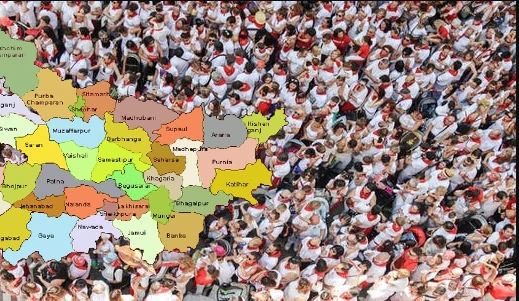
There are more than 2.18 crore cases pending in district courts across the country; 12 States have more than 5 lakh cases to decide; while a little more than one case, on an average, is awaiting conclusion for at least 10 years. Of the total pending cases, more than 20 lakh have been filed by women. It is 9.6 per cent of total pendency. While over 3.19 per cent of total pending cases are being fought by senior citizens. It is how we treat our women and senior citizens!
Statistics regarding matters in the High Court indicate no better position.
Chief Justice of India T.S.Thakur has made impassioned appeal to the Government over shortage of judges and lack of infrastructure.
Many of the judgements are verbose cluttered with the arguments of either side both relevant and irrelevant. Precedents instead of helping solutions have become oppressive and cause diversion of judicial process and justice.
One frequently hears that the arrears are mainly because of shortage of judges. But it is only a partial reason with existing strength, if the judicial process can certainly be less pompous, less time consuming and more effective. Even a cursory review of the cases disposed or pending would show that most of them could have been dismissed at the preliminary stage, when reading of the plaint would show that there is no requirement of reason for respondent to answer, so that they can be dismissed at the stage of admission itself. In the alternative, summary proceedings for admission alone would go a long way as was found during the reference procedure under the Income Tax law, when it was in vogue.
Arrears of lakhs of cases awaiting solution are clogging the courts. If the people drawn to deal with such cases should have ability, integrity, specialised knowledge and sturdy independence, Mr. Palkhivala feels, most of the arrears are capable of being liquidated. Arbitration and Conciliation Act, 1996 offers one solution. Recent experience with Lok Ayukta is another. There are laptops and other electronic gadgetry lightening the burden of judges which are required to be harnessed.
Role of lawyers
Mr. N.A.Palkhivala in one of his talks said – “There can be no Government without order; there can be no order without law; and there can be no administration of law without lawyers, for almost 3000 years, the law had stood sentinels over the progress of man”. He had this to say about the legal profession “it develops absorbtive and analytic capacities of the human mind and offers great intellectual stimulus. It is no small service to be called upon to defend life, liberty and other fundamental rights”. He was of the view that “A lawyer with a well-furnished mind alone can be truly a counsellor at law.” He also pointed out that it is a fertile field for ignorance and foibles of men passing as wisdom matched only by the illiteracy of some lawyers.
Public perception of lawyers is not complimentary to the profession. It is believed, that lawyers have vested interest in perpetuation of a dispute rather than solve them.
A quote from Shakespeare’s King Henry VI saying “the first thing we do lets’ kill all the lawyers”.
States too is responsible for arrears
One other factor is the total irresponsibility of the State Agencies in filing complaints and not dealing properly the appeals against them either by conceding the claim, wherever it is valid or meet the case against it expeditiously. Representation by the lawyers is poor largely because there is no proper instruction. Choice of the Government lawyer has been the subject matter of adverse observations of the Courts in a number of cases.
The position of law in criminal cases is even worse as is evident from hasty arrests and contest on bail and further appeals on either side even in matters of bail.
Need for vigilance
Corruption, which is entrenched in our administration including administration of justice needs greater vigilance. Though there is vigilance section in every department including the Courts, they need to be activised by giving protection to the complainants by ensuring confidentiality where required and make the persons in charge accountable for taking swift action. Supervision over this branch of work is as important as for other duties of occupants of senior position in the judiciary.
Conclusion
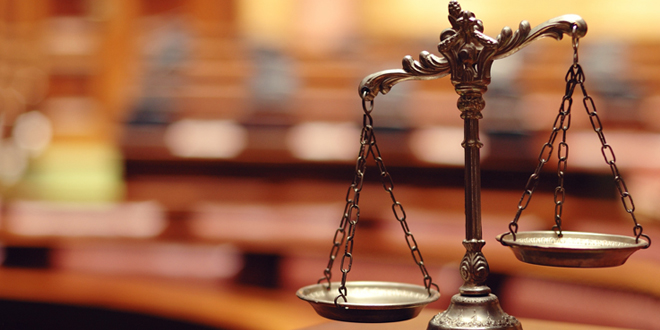
The law is represented by an image of a goddess blindfolded to ensure neutrality and with balance in hand for delivery of justice to be even-handed. If the rapidly deteriorating legal system in enforcement of laws and delay in remedies as of now, people will lose faith in the system itself with anarchy not too distant a proposal.