
B.R Ambedkar’s ideas of social justice still haunt country’s constitutional apparatus. How much have we achieved?
Related articles

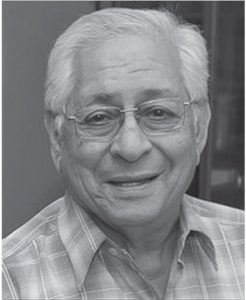
Soli J Sorabjee
Former Attorney
General of India
B R AMBEDKAR is rightly regarded as the principal architect of our Constitution. In the course of his labours, he studied the constitutions of several countries and worked tirelessly.
Ambedkar believed that unless the moral values of a constitution are upheld, the grandiloquent words in it will not protect the freedom and democratic values of the people. Ambedkar also attached great importance to constitutional morality in the working of the Constitution: He explained this — by referring to Grote, the Greek historian — as paramount reverence for the forms of the Constitution, enforcing obedience to authority acting under and within these forms yet combined with the habit of open speech, of action subject only to definite legal control.
The question of whether the President was bound by ministerial advice and could act independently of it or contrary to it arose in the constituent assembly: Ambedkar was of the opinion that the president was bound by ministerial advice, and, Rajendra Prasad, the chairperson of the constituent assembly, had protracted exchanges with Ambedkar on this issue. Ambedkar was of the firm view that “the President could not act and will not act except on the advice of the Ministers. He will never be able to act independently of the Ministers”. These passages are reproduced in the landmark judgment of our Supreme Court in Shamsher Singh’s case, in which the Court accepted Ambedkar’s view.
Ambedkar was also passionate about the guarantees of fundamental rights being appropriately incorporated in the Constitution. The subject of fundamental rights was debated for 38 days after which the Assembly adopted a fairly comprehensive array of basic human rights covering a wide spectrum.
It is trite that rights without remedies are meaningless. Guarantees of fundamental rights remain ornamental promises unless they can be judicially enforced: With that objective in mind, the draft Constitution provided that a person can move the Supreme Court directly for the enforcement of his or her fundamental rights without going through the high court.
According to Ambedkar, “If I was asked to name any particular article in this Constitution as the most important — an article without which this Constitution would be a nullity — I could not refer to any other article except this one. It is the very soul of the Constitution and the very heart of it”. That was his invaluable contribution to our Constitution and to the people of India.
On the concluding day of the deliberations of the constituent assembly, Ambedkar expressed his misgivings about the successful functioning of democracy in our country in these memorable words: “On 26th January 1950, India would be a democratic country in the sense that India from that day would have a government of the people, by the people and for the people. The thought comes to my mind is what would happen to her democratic constitution? Will she be able to maintain it or will she lose it again? If we wish to maintain democracy the first thing in my judgment we must do is to hold fast to constitutional methods of achieving our social and economic objectives. It means we must abandon the bloody methods of revolution. It means that we must abandon the method of civil disobedience, non-cooperation and satyagraha… Where constitutional methods are open, there can be no justification for unconstitutional methods. These methods are nothing but the Grammar of Anarchy and the sooner they are abandoned, the better for us.”
Unfortunately, the Grammar of Anarchy is prevalent still, and Ambedkar’s hope that it would be abandoned has not fructified. He also underlined the importance of observing the caution which English philosopher John Stuart Mill had formulated, namely not to lay civil liberties at the feet of even a great man. There is nothing wrong in being grateful to great men but there are limits to it. As has been well said by the Irish patriot Daniel O’Connell, no man can be grateful at the cost of his honour, no woman can be grateful at the cost of her chastity and no nation can be grateful at the cost of its liberty. Ambedkar warned that Bhakti in religion may be a road to the salvation of the soul. But in politics, Bhakti or hero-worship is a sure road to degradation and to eventual dictatorship.
Social justice was Ambedkar’s mission. He fervently believed that mere equality on paper was not sufficient. What was needed was de facto equality, real equality of opportunity for the millions who had been denied it. In ringing tones, on the last day of the constituent assembly, he pointed out the perils of a “life of contradictions”: “How long shall we continue to deny equality in our social and economic life? If we continue to deny it for long, we will do so only by putting our political democracy in peril. We must remove this contradiction at the earliest possible moment else those who suffer from inequality will blow up the structure of democracy which this Constituent Assembly has so laboriously built up.”
The anguished questions posed by Ambedkar continue to haunt us. Social justice, the signature tune of our Constitution, still eludes us. But we cannot afford to give way to despair. The struggle for social justice must continue with determination and its achievement would be the best tribute we can pay to one of the greatest sons of India.
Source: ‘The Indian Express’